THE IRISH GOTHIC TRADITION
Irish Gothic: A Theoretical Introduction
Jarlath Killeen
Any list of important Irish writers includes a goodly number of Gothicists and horror aficionados, and their apparent over-representation has seemed to some critics to require an explanation. Since the critical turn to the Gothic in the 1970s, after which a torrent of theoretical and historical material on various versions of non-realism poured from the academic presses, a number of important cultural historians with an interest in Irish Studies have attempted to provide this explanation. In this article I will try to map the theoretical terrain covered by a number of these critics, and put forward a few hypotheses of my own which try to build on the insights already achieved.
While the critical literature on Irish Gothic is, as yet, relatively small (though growing every year), what has been produced is of a high standard. Interestingly, the very existence of the Irish Gothic as a literary tradition has been one of the points of controversy. As a brilliant biographer of Joseph Sheridan Le Fanu and a formidable cultural historian, W. J. McCormack is, perhaps, the major theorist of the Irish Gothic. In his seminal ‘Irish Gothic and After’ he examined the field in some detail, tracing its beginnings in a number of now obscure novels from the late eighteenth century, such as Regina Maria Roche’s Children of the Abbey (1796), Mrs. Kelly’s Ruins of Avondale Priory (1796), Mrs. F. C. Patrick’s TheIrish Heiress (1797), Most Ghosts (1798) by ‘the Wife of an Officer’, and Mrs. Colpoys’ The Irish Excursion (1801), and following its trajectory through the writings of Charles Robert Maturin, Lady Morgan, Lady Clarke, Joseph Sheridan Le Fanu, William Carleton, Oscar Wilde, Bram Stoker, W. B. Yeats, John Millington Synge and Elizabeth Bowen. This list of writers looked, to some, to be a ready-made Irish canon, an interpretation bolstered by McCormack’s argument that ‘if the Irish tradition of gothic fiction turns out, on examination, to be a slender one, there are other ways in which such material is of literary significance’.(1) Indeed, McCormack’s article fell foul of the more general reaction to The Field Day Anthology of Irish Writing in which it appeared. Although the editor Seamus Deane explicitly stated that the anthology was not meant to amount to a ‘canon’ of Irish writing, and was through its very inclusiveness designed to undermine and problematise all such pretensions to canonicity, critics of the project claimed that through its selection of editors and its exclusion or under-representation of some Irish writers it effectively amounted to a politicised anthology rather than a catholic representation of the richness of a vaguely defined ‘Irish’ literature. ‘Irish Gothic and After’ was taken by some as indicative of a canon of Irish Gothic, and McCormack later returned to the issue to complicate a simplistically linear reading of his choices.
In his important study Dissolute Characters, McCormack argued that the Irish writers of Gothic literature did not produce a definitive ‘tradition’ but merely mobilised the conventions found in English Gothic.(2) The terms ‘tradition’ and ‘canon’ conjure up too strongly the image of a direct and chronological line of great writers influencing one another. The danger with such constructions is that they effectively close themselves off to external forces and pressures, make Irish culture into an inward looking and self-generating force, and suggest a coherence and formal and ideological similarity that simply does not exist between the texts and authors themselves. In relation to Irish Gothic McCormack posed a chronological problem: there is a large gap of twenty-five years between the publication of Charles Robert Maturin’s Melmoth the Wanderer(1820) and Joseph Sheridan Le Fanu’s first novel The Cock and the Anchor (1845) (which was not a Gothic novel), and a further nineteen beforeUncle Silas (1864) arrived. Such a gapped and discontinuous line could be called a ‘tradition’ in only the most dubious sense. McCormack wanted to complicate this idea of a tradition by examining what he called ‘interventions’ into literary history; he pointed out that Balzac’sMelmoth réconcilié (1836), rather than any Irish text, is the crucial connection between Maturin and Le Fanu.(3) The appeal to ‘tradition’ masks historical processes, elides questions of origin and naturalises complex literary and cultural relations, and does this for ideological reasons. McCormack urges the ‘unmasking of tradition as cousin-german to ideology’.(4) As Terence Brown pointed out in a review of Dissolute Characters:
it is none of McCormack’s purpose … to suggest the kinds of continuities, influences, rewritings, and critical engagements that are the stuff of less forensically sceptical literary history. Literary history in McCormack’s quizzically interrogative mind is by contrast, a contested, troublingly uncertain activity which can only be awarded respect when it respects the weird contingencies of the human variable and the negotiations that occur in all writing between the world as text and the world as social and political construction. His version of a literary history is really a kind of anti-history which is arranged in terms of fissures and discontinuities.(5)
While accepting the force of McCormack’s critique of putative ‘traditions’ as all-too-easy constructions of the ideological imagination, I would suggest that the kind of Irish Gothic line left after his deconstruction resembles actually Gothic edifice, full of suggestive gaps, obscure corners, imposing promontories (the ‘great’ works), fractures, fragments. In other words, despite the effects of historical process and ‘external’ interventions, a list of writers which includes figures as substantial as Maturin, Le Fanu, Wilde, Stoker, Yeats, Synge, and Bowen, all of whom have a connection to the same political and geographical space, all of whom have recourse to the same broadly defined conventions of Gothic, all of whom have some thematic associations, may still amount to a (much complicated) version of a tradition, indeed, a Gothic tradition in the full sense of the word. A literary tradition survives in the face of McCormack’s justifiable worries that ideology rather than history lies behind the positing of an Irish Gothic. To assert a Gothic tradition in Ireland we need not be making a disguised claim to Irish self-sufficiency or even to a thematic coherence linking very different texts and authors, but merely suggesting that certain Irish writers pursued certain similar questions that were historically specific to the Irish situation, and in doing so they utilised the Gothic mode. The ‘Irishness’ of the tradition comes from the fact that the writers had some important Irish connection, dealt with Irish issues, and were partially influenced by (or at least vaguely aware of) an Irish line of precursors.
According to many critics, one of the connecting tissues between many of the writers of the Irish Gothic is their link to the colonial powers in Ireland (see especially Bakus for this): most of them were part of what used to be termed the ‘Anglo-Irish’, though we need to acknowledge that this term elides much in the way of class, theological and political difference. McCormack has, however, objected to a reading of the Irish Gothic as a legacy of a colonial psychology. In a short entry in The Handbook of Gothic Literature he argued that Maturin, Le Fanu and Stoker would not have felt the burden of colonial history and identity on their shoulders since none of them ‘came from landowning families … two were of foreign (Huguenot) background, and one of these (LeFanu) could also boast a Gaelic ancestry (through the Sheridans)’.(6) However, psychological burdens do not always fall where they should. For example, the Huguenot community in Ireland, though putatively ‘foreign’, was fully implicated in the colonial project as it was central to the campaign of William of Orange. William’s army contained a number of Huguenot generals, hundreds of Huguenot officers and four Huguenot regiments.(7) In the 1690 campaign, ‘the youngest and strongest of the French refugees were ready to lay down their lives in defence of the Protestant religion and against the enemies of England’.(8) Securing the Williamite settlement was thus at least partially the work of the Huguenots. Moreover, a major extension of the Penal Laws took pace while the Huguenot Lord Galway was governor, and much subsequent historical analysis from Irish Catholics claimed that Galway was out for revenge against the Catholic Church which had mistreated the Huguenot community in France under Louis XIV.(9) Although in 1970 J. G. Simms demonstrated that Galway was not, in fact, behind the extension of the Penal Laws, the interdependence of the state and the Huguenot community was widely believed in the eighteenth and nineteenth centuries.(10) Such historical details indicate that the burden of colonial history is wider than we initially expect, and we should not be surprised to find that this burden is one of the main issues Irish Gothic revolves around.
What remains for cultural historians is to expand on and explain the cultural significance of such connections between the Irish writers of Gothic fiction, and also to explain why Ireland should have produced a remarkably large number of writers who were so attracted to Gothic conventions. In perhaps the first substantial article on these matters, Roy Foster’s study of Irish ‘Protestant Magic’ usefully linked the writing of Gothic fiction, an interest in the occult and spiritualism, a general superstitiousness, membership of the Freemasons and other arcane societies, as all aspects of what is really the same Irish phenomenon, a phenomenon he identified as peculiarly Protestant in provenance. In a response to a reading of W. B. Yeats as having ‘remembered’ his Protestantism only in the 1920s when he tried to implicate himself in a liberal Irish Protestant tradition of Edmund Burke, Jonathan Swift, George Berkley and Henry Grattan, Foster argued, persuasively, that Irish Protestantism had been an aspect of Yeats’ identity from the very beginning. Foster reminded the reader that, although Irish Protestantism has a proud tradition of rational philosophising and healthy scepticism, another, darker, side to the Protestant character has always existed and found expression in an obsession with the occult and the Gothic. He linked this attraction to occult process and marginal states of being to a realisation by Irish Protestants of their increasing marginalisation in the new Ireland that was emerging throughout the nineteenth century. As the Catholic middle class grew and began to occupy traditionally Protestant positions in municipal government and local structures of power, Protestants compensated for their loss of power in the real world by re-investing their energies in another, more obscure, and yet more powerful domain. He argued that all the major Irish Gothicists were marginalised figures ‘whose occult preoccupations surely mirror a sense of displacement, a loss of social and psychological integration, and an escapism motivated by the threat of a takeover by the Catholic middle classes’.(11) Foster traced a connection between the neo-classical castellation of Ascendancy houses in the eighteenth century and the Gothicising of Protestant fiction in the nineteenth century. In both cases the cultural fashion was protective: by investing in the neo-classical Protestant Ireland laid claim to a superior intellect beyond the vicissitudes of political reality; the Gothic enclosed the Ascendancy in a highly codified and stratified world requiring rites of initiation, secret knowledge, and a sense of esoteric entitlement. Moreover, both modes stretched into the distant past and thus pre-empted the emergence of Catholicism, thus rooting Irish Protestants in a history longer than their political rivals.(12)
Roy Foster’s explanation of the Irish Gothic persuasively links politics, religion and culture, and his depiction of the Protestant Irish as a cultural group obsessed with their own impending extermination and determined to find methodologies by which to circumvent such an annihilation by escape into other realms of power is certainly convincing. Yet, we should not push this explanation too far as, in certain phraseology, it can appear to absolve Irish Protestants of any involvement in nineteenth-century history itself. This is more clearly the case in Julian Moynahan’s articulation of this position:
The Gothic seems to flourish in disrupted, oppressed, or underdeveloped societies, to give a voice to the powerless and unenfranchised, and even, at times, to subvert the official best intentions of its creators.(13)
This, I think, is a rather forced version of Foster’s argument. England, the locus of the Gothic tradition in this period, could hardly be considered a particularly ‘underdeveloped’ country, and we must remember that the Protestant writers of Gothic in Ireland formed a part of the (relatively) powerful rather than the powerless, and it doesn’t really make sense to view them as marginalized in anything other than purely psychological terms. The very broadly defined Protestant population was still in social and political control; this was, though, a control that was under constant threat, and which always seemed on the verge of slipping away. Gothic, in truth, may not belong to the dispossessed but to the paranoid possessors, the out-of-control controllers, the descending Ascendancy. I think we need to be careful in rushing too quickly to an argument that would somehow render Irish Protestants so marginal to power in nineteenth-century Ireland that the realm of the Gothic and the occult substituted for real influence in the real world. Such a view is in danger of distorting the picture of Protestant power in Ireland which may have been on the wane through the nineteenth century, but whose demise was long in gestation and longer in arrival.
Moreover, Irish Gothic has a longer history than the nineteenth century, longer, in other words, than the actual marginalisation of Protestant interest in Ireland. McCormack has traced it back to the last decade of the eighteenth century, but in my own work, I have located the ‘origin’ of Irish Gothic in the mid-seventeenth century. If we take into account the tropes and themes that preoccupy Gothic literature in general, then an Irish tradition can be followed at least back to the historian Sir John Temple’s response to the 1641 rebellion.(14) In his The Irish Rebellion(1646), Temple codified many of the images and arguments that would reappear again and again in poetic and fictional texts that would later be termed Gothic. The 1641 rebellion was certainly configured by its major historian as a moment when extermination appeared to be on the cards for the Protestant ‘race’ in Ireland, but paranoia does not marginalisation make. It is not legitimate, in other words, to trace feelings of fear and terror on the part of the Protestant community in Ireland and come to the conclusion that this fear was therefore indicative of a genuine diminution in real power. Proto-Gothic literature flourished during the period of the Penal Laws when Protestant power was consolidated, and traces of a heightened fear of extermination can be found in the work of some of the most powerful men in eighteenth-century Ireland, such as Archbishop William King, who was constantly seeing Catholic ghosts and monsters lurking in the outer darkness.
Thus, a ‘colonial’ history, Protestantism, and the fear of marginalisation – rather than marginalisation itself – are central features of the Irish Gothic tradition. The demonisation of both Catholics in general, and Catholicism as a theological and social system, is also central to the Irish Gothic: its monsters are invariably Catholic or crypto-Catholic, the clearest example of which is the anti-Catholic manual that is Maturin’sMelmoth the Wanderer in which the Catholic Church is depicted as a cornucopia of perverts, control freaks, Satanists, and power-hungry sadists. Most Protestant Gothic is an articulation of what Tzvetan Todorov has termed fantasy of the ‘not-I’.(15) The themes of ‘not-I’ fantasy deal with the relation of the Self to the world through the mediation of the Other. Danger to the Self emanates from without, externally; the Self suffers, or believes it suffers, an attack against its integrity by some outside force. Within Irish Protestant Gothic Catholicism functions as this external threat, partly for obvious reasons – overwhelming demographics, agitation, difference. Yet, the Gothic analysis of Catholic monstrosity incorporates not only a disgust with Catholicism, but also an intense obsession with the Catholic, an obsession which often spills over into desire. The association of Catholics with bizarre sexual practises and sadistic and masochistic rites of passage (seen, for example, in Temple’s argument that Catholics performed almost unbelievably perverse acts on Protestant corpses), a trope central to the Gothic, is indicative of a widespread though terrified attraction for that which is denied. The combination of Catholophobia with Catholophila illuminates other aspects of the Gothic, including the interest in the occult and the cabbalistic. In writing Gothic fiction, Irish Protestants were partly trying to explore the Catholic Other that had been rhetorically eliminated by the Penal system. The Irish Protestant fascination with antiquarianism, folkloric studies and Irish ‘superstitions’ is, at least to some extent, emblematic of an ethnographic encounter with a native population, and expressive of a means by which the Protestant Self can safely explore (and perhaps absorb) aspects of that forbidden culture. If Gothic often violates the ‘official best intentions’ of its authors,(16) this often involves a disintegration of the intentional anti-Catholic rhetoric of the narrative in a point of aporia.
To illustrate such disintegration it is useful to take the example of perhaps the most stridently anti-Catholic writer of Irish Gothic material, Charles Robert Maturin, and consider the Gothic fiction Maturin told of his own origins.(17) Maturin always claimed that he was descended from an abandoned child found (like Jesus) wrapped in swaddling clothes on the streets of Paris in the mid-seventeenth century. The aristocratic lady who found the boy-child raised him a Catholic, but he later converted to Protestantism and became a minister. This was enough to get him sent to the Bastille after the Edict of Nantes was revoked in 1685, and there he remained for twenty-six years. Once released he fled to Ireland to his wife and child, and established the line from which Maturin would descend. The Mosaic and Christological implications of the story are obvious, the baby raised in one faith only to become a liberator of another. Here French/Continental Catholicism functions as the old repressive dispensation prepared to crucify the one sent to purge it and bring the new Gospel of joy: Protestantism. The insignia of the past is not so easy to erase however, and Maturin also believed that his surname could be traced to a French Catholic religious community – Les Maturins.(18) If Catholicism is that which has been escaped from it is also that which continues to define the limits of identity. Inscribed into Maturin’s very identity is a theological dualism; to deny one religious gravitation is to leave a void in which identity itself begins to crumble. In his genealogical fantasy Maturin subverts the closed intentions of his original Oedipal fiction.
This theological and genealogical uncertainty (19) is also present in Maturin’s most famous work, Melmoth the Wanderer, written as the Catholic Emancipation campaign began to warm up. Although the action of the novel takes place in the nineteenth century, many of the stories recounted in its pages relate back to the late seventeenth century, that period when the Huguenot community to which Maturin belonged played such an important role in the Williamite campaign. The theme of dispossession which runs through the novel reflects the circular return to the Cromwellian past which has dogged Irish history – that primal scene when Irish Catholics were banished to ‘hell or Connaught’ to make way for their ethnic and religious superiors. Of course, Melmoth himself has been dispossessed by his Cromwellian brother, and is thus in an equivalent position to that Irish Catholics found themselves. The central anxiety of the novel is the reappearance of the dispossessed Melmoth, a figure who might stand for all those demonic figures now also complaining of dispossession: Irish Catholics. Melmoth is, after all, only a threat and a wanderer because he has been denied access to the Big House which is rightly his.
Maturin’s Five Sermons on the Errors of Catholicism (1824) released his vitriolic outpourings of hatred on the Catholic Church, and as a nationalist his greatest fear must have been a union between the religion he despised, the people he distrusted (native Irish), and the cause he espoused. Yet, Maturin uses the figure of Melmoth, a symbolic Irishman, to make the most malicious attack on Roman Catholicism in the novel. In Volume III Part XIV, Melmoth explains to Immalee, his island lover, what religion is, and shows her all the religions of the world. His discourse is, of course, not an objective account, and he claims that Judaism, Hinduism and Catholicism are religions typified by their dedication to sadism and masochism, while Protestantism is presented as the religion of benign truth. Thus, violent anti-Catholicism lies at the centre of the novel, yet, as Chris Baldick points out, Protestant truth is proclaimed by the most reviled figure of the narrative, the Wanderer himself.(20) It is Maturin’s villain who is the most consistent Protestant in the whole novel (while simultaneously representing all banished and exiled figures, including Irish Catholics), which surely tells against his claims that it is Protestantism which is the means to salvation.
Paranoia, Protestantism, anti-Catholicism, desire for the Other – these are all fairly typical of Gothic. There is nothing particularly ‘Irish’ about any of these aspects of the Gothic oeuvre as a whole, although in Melmoth the Wanderer Ireland did produce what is perhaps the most heightened example of traditional Gothic fiction imaginable, a novel which works itself into such a pitch of Gothic excitement that the reader gets lost in the twists and turns of its spectacularly labyrinthine structure – so elaborate indeed, that only Varney the Vampyre rivals it for formal complexity. What is peculiarly ‘Irish’ about the Gothic tradition is that it emerged from a geographical zone which was defined as weird and bizarre. Indeed, Ireland as a whole was identified as a Gothic space. In The Milesian Chief (1812), Maturin articulates this commonly held view of Ireland cogently:
[Ireland is] the only country on earth, where, from the strange existing opposition of religion, politics, and manners, the extremes of refinement and barbarism are united, and the most wild and incredible situations of romantic story are hourly passing before modern eyes.(21)
In this passage, Maturin references the reading of Ireland which was dominant: seen through the eyes of the English reading public for whom the Gothic authors were writing, Ireland was a spatial and temporal anomaly. The view of regional space as a classic site of Gothic energies and horrific creatures has been central to Gothic convention. Traditionally, horror and the Gothic takes place in what has been called the ‘outlandish’: obscure places of the country, in the Scottish highlands, in the mists of Ireland, in the valleys of Wales, in Cornwall (!), or – where the Gothic locates itself in an urban environment – monstrosity emerges from under the stairs, from the attic, out of the cellar, spaces on the edge rather than the centre. For English eyes, the Celtic fringes were such ‘outlandish’ spaces, Ireland peculiarly so given the link between the geographical term ‘outlandish’ and the Catholicism dominant there.(23) Much Gothic fiction is concerned with the outlandish and the regionally strange, and where the plot does not take place on the Catholic Continent, it usually locates itself in those geographical areas deemed marginal to England. Darryl Jones has termed fictions which concern themselves with identities and areas ‘marginal’ (a word he rightly objects to) to England (and also to cosmopolitan America) ‘regional Gothic’, and claims that ‘in the ideological rhetoric of horror, Catholics, Welshmen, hillbillies and cannibals are all pretty much the same’.(24) He points out that the construction of the Celt as a kind of counter-Enlightenment figure, and of Celtic lands as zones of the weird, went hand in hand with the emergence of the Gothic novel and the materialization of a modern English identity. As English identity was configured as normative, those areas which surrounded it – the ‘Celtic fringe’ – were simply constructed as abnormal.
Moreover, as Christopher Morash has outlined, the Celtic fringes were not only configured as repositories of all that which England wished to deny and banish (the irrational, the superstitious, the perverse, the Catholic, the cannibal), they also became a kind of zone of atemporality, a place of the primitive and the atavistic which the modern world had not yet touched. If the Gothic is often seen as the return of the repressed, the past that will not stay past, Ireland was usually read as a place where the past had never in fact disappeared, a place where the past was the present. Morash points out that nineteenth-century philologists such as James Cowles Prichard, Franz Bopp, and J. Kasper Zeuss, argued that in Celtic languages was preserved the remains of a European ur-language and that ‘in a slide which was common in nineteenth-century ethnography and beyond, this was taken to indicate that the Celtic peoples of the present day were an instance of a cultural anachrony, a race out of time’.(25) In such Celtic regions as Ireland time and space took on different meanings and history itself was not so easy to account. According to Declan Kiberd, Ireland operated as ‘England’s unconscious’; hence the large number of English Gothic narratives which use Ireland as a shorthand indicator of the depraved past rather than the technological future.(26)
However, Ireland’s important position as a Gothic space in the English mind does not really explain why Irish Protestant writers were so attracted to the Gothic form. While it makes sense for an English writer to Gothicise the Irish landscape, for the Irish Protestants that Gothic space was home: to Gothicise it was to risk making a monster of themselves. It is clear that by the end of the eighteenth century the English had rejected the claims of the Protestants of Ireland to English ethnicity and included them in the general stereotyping of the Irish as weird backward perverts; in response the Protestants of Ireland had accepted Irish ethnicity and nationality and attempted to reconfigure this identification as a positive rather than a negative marker of identity – which largely required denying Irish Catholics the right to the same nationality.(27) It would seem perversely counter-productive, after such a long and painful process of identification with Ireland, for Irish Protestants to contribute to a genre which could serve to justify English views of the Irish and Ireland as congenitally primitive and out-of-step with the modern world. Christopher Morash has provided one possible answer as to why Irish Protestants did write Gothic fiction in his claim that Irish Gothic is not a celebration of the weird and the occult so much as an attempt to exorcise these elements from Irish society. Rather than accept the version of Ireland as Gothic, the traditional narratives of Irish Protestants attempt to find ways of destroying this image: the Irish Gothic is a riposte to a Celticist project which almost invariably celebrated the survival of the past in the present (often in racial terms), a narratologically produced demand for a stake to be driven in the heart of all that confounds the project of modernity, particularly when that agent of resistance is the blood of an ancient race unaccountably flowing through the veins of the present.(28)
Just as Count Dracula must be staked at the end of Bram Stoker’s 1897 novel, so too the version of Ireland as atavistic must be banished (and, the suggestion goes, its Catholic representatives as well), and Protestant modernity ushered in. This is a fascinating reading of the entire Irish Gothic tradition as one aspect of the wider project of Protestantising and modernising Ireland. Rather than an indulgence in a form of political escapism from the realities of power loss, as Roy Foster argued, Morash believes that the Gothic is an attempt to re-assert the kind of cultural realism deemed necessary for a nation to enter the modern world and be accorded the full privileges of nation status.
I would like to suggest another possible reason for the attraction of Irish Protestants to the Gothic, one that slightly complicates both Foster’s and Morash’s arguments. For this explanation we need to return to that seminal text so central to understanding this genre: Tzvetan Todorov’sThe Fantastic. His definition of the ‘fantastic’ is crucial:
In a world which is indeed our world, the one we know, a world without devils, sylphides, or vampires, there occurs an event which cannot be explained by the laws of this same familiar world. The person who experiences the event must opt for one of two possible solutions: either he is the victim of an illusion of the senses, of a product of the imagination – and laws of the world then remain what they are; or else the event has indeed taken place, it is an integral part of reality – but then this reality is controlled by laws unknown to us … The fantastic occupies the duration of uncertainty. Once we choose one answer or the other, we leave the fantastic for a neighbouring genre, the uncanny or the marvellous.(29)
This mode of hesitation, this psychological ambivalence, which Todorov believes central to the fantastic, is precisely what defines the Irish Protestant mentality. There were no greater cultural hesitators in the British Isles than the ‘Anglo-Irish’; so deep was their sense of cultural ambiguity that Julian Moynahan has rightly called them a ‘hyphenated culture’. As hybrid figures the Anglo-Irish were in a perfect position to develop an important tradition in a literature that emphasises hesitancy over certainty, and which refuses to dissolve binaries such as living/dead, inside/outside, friend/enemy, desire/disgust. W. J. McCormack has identified the ‘verbal intricacy … represented by complicated oaths of loyalty, arcane or antique documents, and compromising last wills and testaments’ as central to the Irish Gothic,(30) and this is only fitting given the ethnic and national complexities involved in the construction of an Irish Protestant identity in the seventeenth, eighteenth and nineteenth centuries. Given their eighteenth and nineteenth century attempt to renegotiate their identity, the tortuous verbal and plot convolutions of the typical Gothic novel were perfect representations of the existential gymnastics forced upon the Anglo-Irish by history. The Gothic ambivalence highlighted by Todorov was irresistible for such pathological prevaricators and perfectly represented the hesitancy of the Anglo-Irish between an ‘English’ realist embracing of the technological, the future, the rational, and an ‘Irish’ Catholic superstitiousness, anachrony, atavism. For, if most Irish Gothic novels do, as Morash insists, end with the expulsion of the primitive past, that expulsion is never really complete because the Gothic writers, like the people they represent, were not fully convinced of the desirability of the rational. Dracula, for example, does not conclude with the death of the Count but rather the birth of Jonathan and Mina Harker’s baby. This baby is burdened with the ‘bundle of names’ of the men of the Band of Light as if to guarantee his role as a symbol of a bright future in which the atavistic has been fully laid to rest.(31) However, in a text which revolves so importantly around the circulation of blood, one name has been conspicuously left out of this new baby’s title. After all, Dracula has bitten Mina, and she has partaken of his blood in a perverse parody of the Eucharist. Van Helsing himself hints that such a sharing of blood is tantamount to sexual consummation, and if Dracula’s blood courses through Mina’s veins it must surely have been transferred to her new son. This possible survival of the primitive in the new is part of a wider attraction to Dracula throughout the novel, an attraction felt by Mina herself – the moral exemplar of the plot – who tells us that when confronted by Dracula in her bedroom she did not want to ‘hinder’ his bloodsucking,(32) unsurprising perhaps when Dracula operates at times as an ultra-masculine embodiment of all that her now white-haired and presumably impotent husband Jonathan cannot provide. In fact, a refusal to completely exorcise the atavistic is a recurring feature of Irish Gothic, from the entirely ambiguous ending of Melmoth the Wanderer, where it is unclear if the Wanderer has actually disappeared for the last time, to the final line of Le Fanu’s ‘Carmilla’ in which the now dead narrator Laura writes that she sometimes thinks she hears ‘the light steps of Carmilla at the drawing-room door’(33) – an ending which suggests that perhaps Laura is dead because Carmilla has finally come to claim her.
This sense of cultural hesitancy between the future and the past, the real and the supernatural, the Anglo and the Irish, runs through much of the literature of the Protestant Irish and helps to explain why the realist tradition was never very successful here. This has been a much debated point in recent theoretical discussion of the development of the Irish novel, with many reasons put forward to explain the relative failure of a realist tradition. Terry Eagleton famously put it down to the fact that Ireland in the nineteenth century was a place of division and disruption rather than security, and since ‘the realist novel is the form par excellence of settlement and stability’ it could not gain any hold.(34) Luke Gibbons echoed this view when he argued that the Gothic works of Maturin et al may be the best place to look for a historically accurate ‘story of Ireland’ since the ‘inchoate structures’ of the Gothic were a more telling representation of an Ireland characterised by violence and terror in a colonial context than any putatively factual history book could be.(35) David Lloyd posited that there were too many elements within Ireland that were could not be assimilated by a realist form. He argues that the paradigm of the realist novel is the bildungsroman, the novel of education and growth, and it thus relies on notions of development and maturation, expressive of a society growing teleologically into a nation state. Ireland was, however, composed of elements which were uninterested in such statist narratives, and these ‘non-modern’ elements could not be properly accounted for by the standard realist conventions, and thus the realist novel never really had a chance in Ireland.(36)
These explanations are all persuasive. However, the cultural hesitancy of the Protestant Irish, and the correlation between that hesitancy and the Gothic mode, does offer a good reason why even novels which offer putatively realist accounts of Ireland are continuously disrupted by the Gothic mode, and why these novels seem unable to achieve closure, remaining lost in the interstices of the Anglo-Irish binary. A good example of the inability of the realist mode to dominate and overcome its Gothic counterpart is a novel like Maria Edgeworth’s Ennui (1804). On the face of it this is a clear example of Christopher Morash’s view that the main aim of Protestant Ireland was the expulsion of the Gothic, anachronistic elements in Irish society and so that modernity could be brought fully to bear on the island. The plot is initially straightforward enough: the bored English Lord Glenthorn travels to his Irish estate in order to make his life more meaningful. On the way he encounters the standard stereotypes that were believed to populate Ireland: inveterately lazy bumpkins who speak in rather silly accents. Glenthorn is presented with two alternative views of Ireland’s future. One Mr. McLeod urges the slow but steady modernisation of the country through the introduction of English methods of agricultural organisation, education of the Catholic peasantry in non-denominational schools, and encouragement of industry; one Mr. Hardcastle insists that the Irish are un-reformable and are lazy and improvident by nature as opposed to culture, and advocates coercion and a firm colonial hand in keeping them down. The choice lies between allowing the Irish to remain characters in a Gothic story, or gently translating them into a national bildungsroman. The ideological weight of the novel appears to come down on Mr. McLeod’s side, and suggests that the spectre of the Gothic can be banished given enough reforms and patient application of reason and technology. However, the main problem with this easy reading of the novel is that it ignores the energies of the text: Lord Glenthorn is completely bored while in ‘rational’ England and is only awakened to life’s possibilities when he meets Ellinor, his Irish former wet-nurse and a banshee-like figure straight out of a Gothic melodrama. His excitement continues once he arrives in Ireland and confronts its Gothic scenery and meets its Gothic cast list, and almost becomes involved in the 1798 Rebellion, organised by a secret society meeting near some sublime cliffs. There is a sense, in other words, that recreating Ireland into a miniature version of England may well be industrially desirable and economically necessary, but that it will be disastrous from a psychological view and that cultural decadence and ennui will follow such a recreation. The plot of the novel certainly seems to opt for a reformable and possibly realist Ireland of the future; the energy of the novel lies completely with the Gothic melodrama Glenthorn finds being enacted when he migrates there. Ennui is a clear example of Gothic energy refusing to allow realist closure. Edgeworth may be intellectually on the side of English reform, but psychologically her novel is more attracted to Irish Gothic irreality.
With the rise of the Catholic middle class, the rationalisation of Catholicism through the Devotional Revolution, and the gaining of independence in 1921, power passed out of the hands of the Anglo-Irish to the Catholics who had for so long been the representatives of the Other found in Protestant Gothic fiction. Cultural hesitancy passed to them too, a hesitancy between what came to be called ‘traditional Ireland’, the Ireland of the countryside, the Church, the hearth (or some stereotyped version of this Ireland), and ‘modern Ireland’ defined by full engagement with the technological future. Irish Catholics also took to writing fiction characterised by an uneasiness about cultural identity, and this psychological hesitancy has facilitated the proliferation of Catholic Gothic narratives in which the cottage, the castle and the church merged as spaces attempting to block the nation’s progress towards the rational, cosmopolitan future. In recent years Gothic imagery has been used to characterise the 1940s and 1950s, and its industrial schools and Magdalen laundries have all been imbued with an aura more common to the horror film than the history book. The figures of the past, like Eamonn DeValera and Archbishop McQuaid, have also been transmuted into stock villains, with all the sexual perversions and unmerciful authoritarianism which was associated with the Catholic authorities of Maturin’s novels. However, despite this Gothicisation of the traditional, there remained a sense of attachment to this recent past, and a fear that in rejecting it something of the sublime might be lost and Ireland could find itself in a cosmopolitan banality. This hesitancy has kept the Irish Gothic alive and well in the twentieth century.
However, the Irish Gothic, understood as a form of perpetual hesitancy, may not be altogether possible in Celtic Tiger Ireland since it appears that the Irish have finally made a choice and rejected the hyphenated mind of the past. Gothic Ireland now exists only as a tourist virtual reality. Perhaps the last great Irish figure who could be considered a Gothic ‘hero’ was Charles J. Haughey, a monumental cultural hesitator in the best sense of the term. A political and social modernizer and innovator (seen in his judicial reforms, especially the Succession Act, his development of Temple Bar, his handling of the presidency of the EC in 1990), he was nonetheless reviled by his fellow cosmopolitans because he spoke in the language of what they considered atavistic tribal nationalism (despite his importance to the Peace Process), and, in the eyes of the high priests of modernity he was seen as a monster needing a stake through his heart. Ireland of the 1970s and 1980s often appeared to resemble the plot of a Gothic novel, Garret (Fitzgerald) the Good chasing down Charlie the Bad across an increasingly improbable plot, a battle won when Brian Lenihan – closely associated with the Haughey element in Irish politics – lost the Presidential election to the liberal Mary Robinson, a woman associated with the ‘right’ side of recent ideological battles between stereotyped traditionalists and modernisers. The truth was, as usual, more complex. Haughey, like the Anglo-Irish writers of the eighteenth and nineteenth centuries, had his feet firmly in two camps, and pointed in two directions: towards an unreal and weird landscape he called (in a now notorious Channel Four documentary) ‘Charles Haughey’s Ireland’, and towards the virtual reality future of the Irish Financial Services Centre. Perpetually hesitating between these two modes, Haughey effectively instantiated a schizophrenic Ireland unable to decide whether its future lay in the past or the present. In the end, as Ivana Bacik has put it, Ireland was dragged ‘kicking and screaming’ into postmodernity through three abortion referenda, two divorce referenda, and a host of other, bitterly divisive, changes. When Haughey died in June 2006, the Gothic Ireland recognised by Maturin, a place where all manner of things were possible, a GUBU land of the imagination, also passed on. While some popped unseemly corks of celebration at Haughey’s death – the death, so it seemed to them, of an Ireland they despised, an dark Ireland of the deep past – others reflected, like Lord Glenthorn in Edgeworth’s Ennui, that perhaps with the coming about of this new modern Ireland something frightening, fractious, dangerous, but exciting and stimulating had been lost. However, as Declan Kiberd has reminded us, Irish traditions are at their most vital when they have been proclaimed about to die,
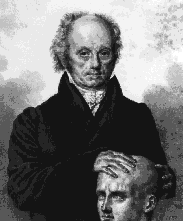 The real scientific Phrenology, which established a direct link between the morphology of the skull and the human character, was discovered by the Austrian physician Franz Joseph GALL (1758-1828). Gall put the foundations for an anatomic caracteriology. He was one of the first to consider the brain as the home of all mental activities.
 Other important authors on the subject in the last century include the Scottish brothers George COMBE(1788-1858) and Andrew COMBE (1797-1847). George Combe was the author of some of the most popular works on Phrenology and the hygiene of the mind, like The Consitution of Man or
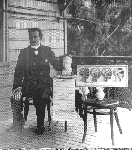 In the early 19th century, Phrenology gained a rapidly growing interest. Some scrupless people did however abuse the science for commercial purposes, and the Victorian period saw the emergence of Phrenological parlours which were closer to astrology, chiromancy, and the like, than to real scientific characterology. Unfortunately, those con-men have done a lot to stain the image of Phrenology as a real science, and their bad influence lives up to today.